Every job below is one we do ourselves across Kingston Mines.
We build new decks on footings poured below frost line, which around here means about 42 inches down. Framing is pressure-treated lumber with structural screws, not just nails, and every ledger board gets properly flashed so water can't get behind it.
Soft or bouncy boards usually mean the joists underneath have started to rot, not just the decking on top. We pull up boards to check the frame before quoting anything, because a patch over a rotten joist doesn't hold.
A deck left unsealed through an Illinois winter will gray out and start splitting at the end grain within a couple seasons. We pressure wash, let the wood dry fully, then apply a penetrating stain or sealer rated for the lumber you've got.
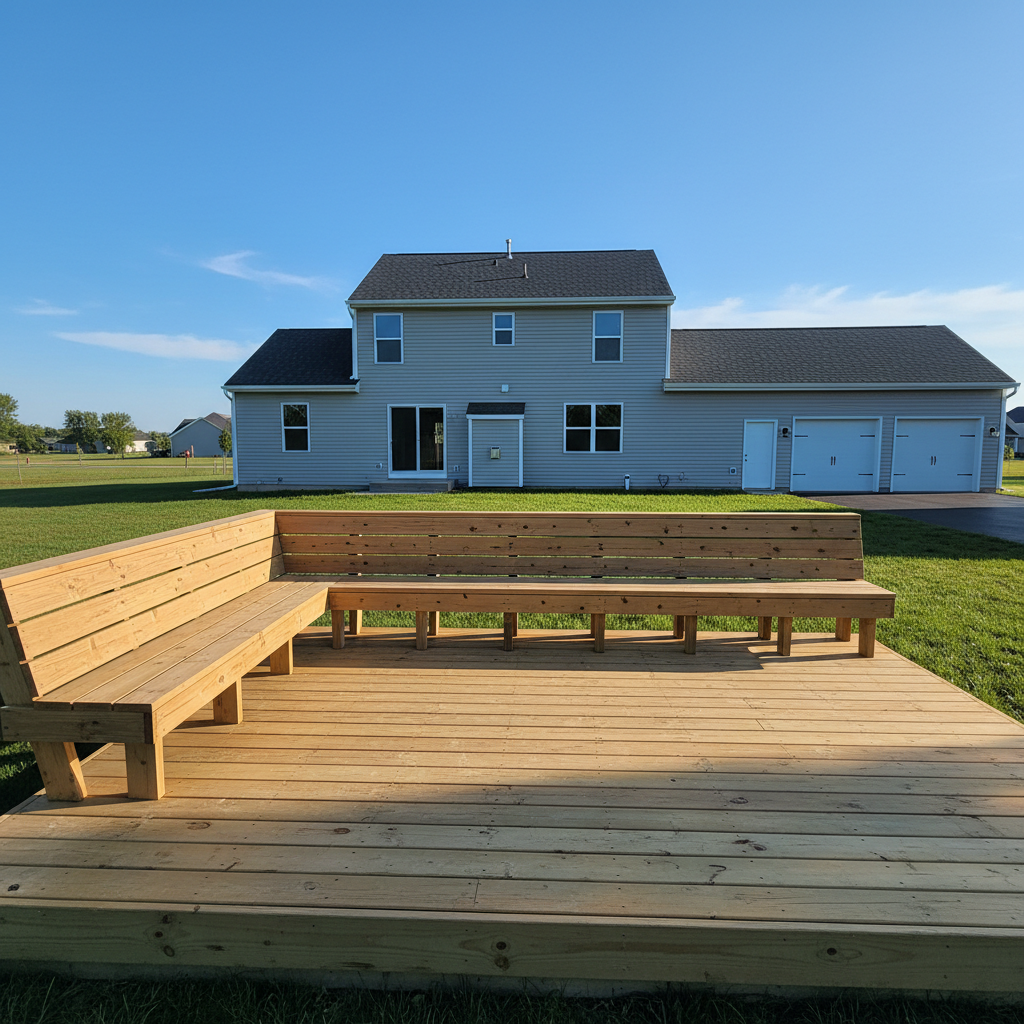
If you want a multi-level deck, a built-in bench, or a pergola over part of it, we draw it up before we touch lumber. We'll tell you if a design puts too much weight on one span before it's a problem instead of after.
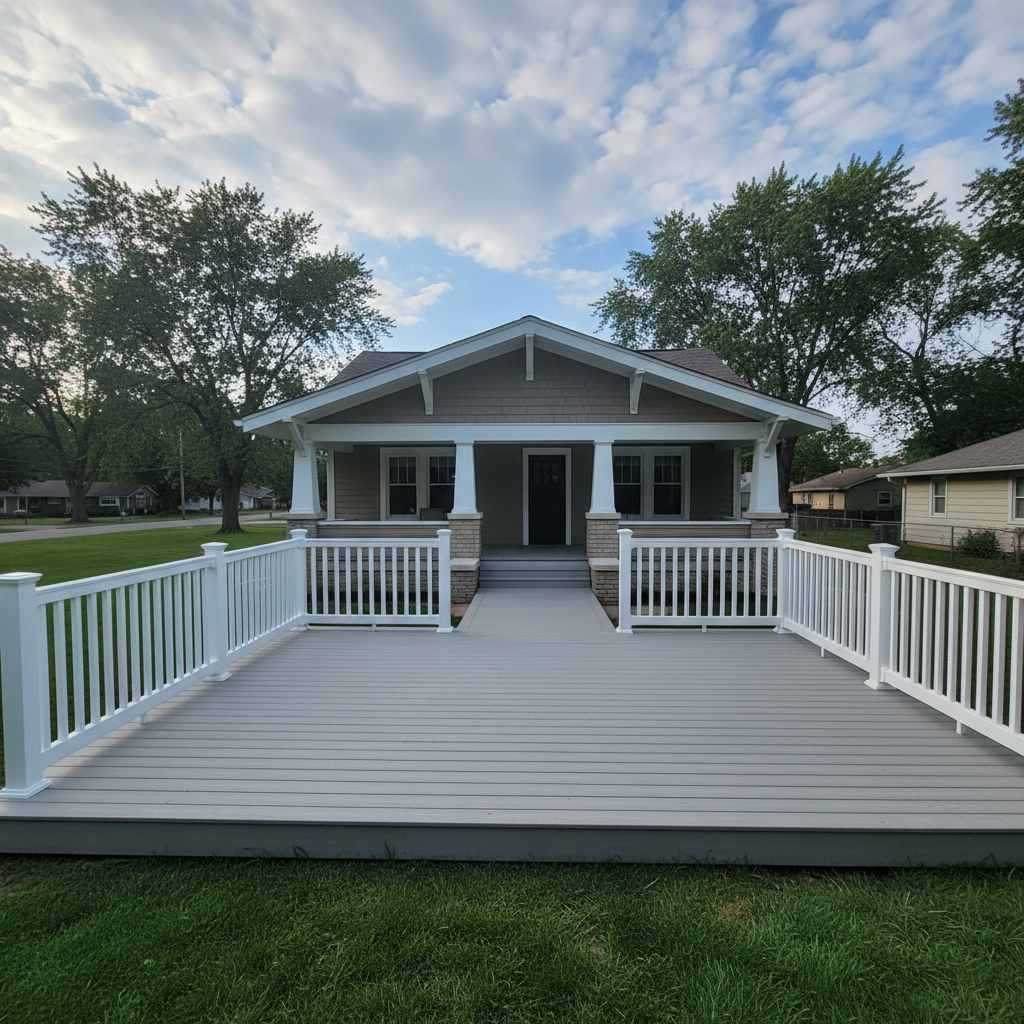
Composite boards don't rot, splinter or need staining, but they do require the right joist spacing underneath or they'll still sag over time. We follow the manufacturer's span tables exactly, which for most composite brands means joists 12 to 16 inches apart instead of the 16 to 24 you'd use for wood.
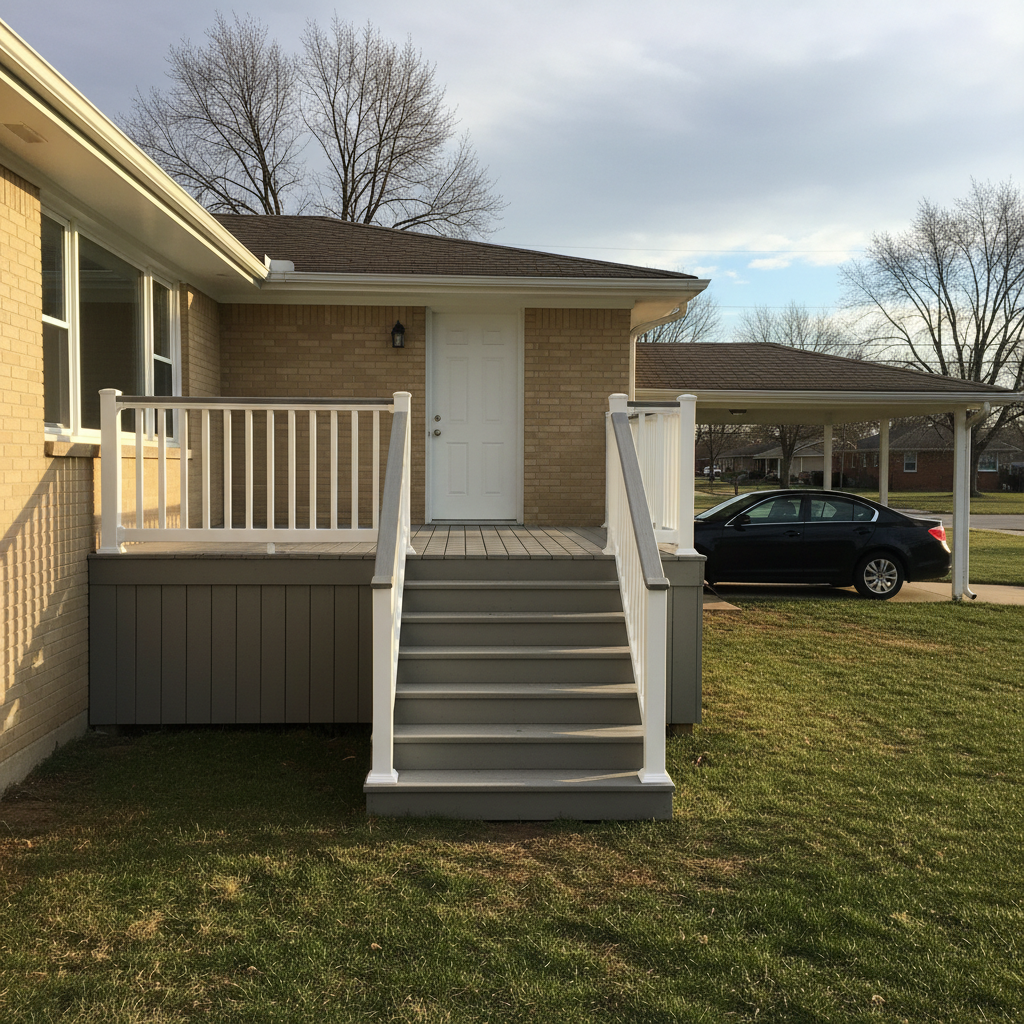
Building code in most towns around here calls for railings at 36 inches minimum on residential decks, 42 on commercial, with baluster gaps no wider than 4 inches. We build to that spec whether you're going with wood, cable or aluminum rail.
When a deck is leaning, or the stairs have pulled away from the landing, the problem is almost always in the framing, not the surface boards. We replace ledger boards, joists and posts as needed and re-anchor everything to the house correctly, which is often where the original build went wrong.
Sometimes the cheapest fix is tearing the old deck out and starting over, especially if the footings were never set deep enough to begin with. We haul off the old lumber so you're not stuck renting a dumpster.
We frame and screen in part or all of an existing deck, which keeps the bugs out without losing the space. It's a smaller build than a full sunroom, and it can use the deck's existing footings if they're solid enough to carry the roof load.
Board replacement on an older deck only makes sense if the joists are still sound, so that's the first thing we check. We replace boards to match spacing and fastener pattern so the new sections don't stand out from the old.
Four steps, and no surprises in any of them.
You tell us what you want doing, we look at what is actually there, and we ask the awkward questions early.
In writing, itemised, free. If something might add cost later we flag it now rather than at the end.
Same crew throughout. We cover your floors, keep the dust down and tidy up before we leave each day.
You point out anything you are not happy with and we fix it before the invoice, not after.
We bring materials and crew to job sites across this part of central Illinois.
What to expect once a deck project is underway.
Describe the problem and we will tell you what it probably is. No obligation.